What Tucker Carlson Got Wrong About Kabbalah
Frater Lucis · 9 October 2025
In a word, everything.
Recently, I listened to Tucker Carlson's podcast on "The Occult, Kabbalah...". It was an interesting format because at the beginning, they both said they didn’t know much about Kabbalah at all, and then dedicated over 30 minutes in different segments explaining “Kabbalah” and the “Tree of Life.” So much for journalistic integrity.
What I heard was not merely confusion, but an echo of a very old pattern: Jewish mystical tradition stripped of context, mashed together with occult sensationalism, and then offered back as evidence of hidden evil.
This is not new. It is the same formula that undergirded the medieval blood libels of the Spanish Inquisition, 19th-century conspiracy pamphlets, and Nazi occultism. It is, quite literally, disguised antisemitism—a centuries-old projection of society’s fears onto Jewish wisdom.
Let us examine this clearly.
1. The Historical Kabbalah vs. the Podcast Narrative
The podcast guest claimed that Jews “picked up Kabbalah from the Babylonians” in the 5th century BCE and preserved it as a kind of magical secret. In truth:
Kabbalah, as we know it, is medieval. Its first recognisable texts appear in Provence and Spain in the 12th–13th centuries (Sefer ha-Bahir, Sefer ha-Zohar), about 1700 years after the podcast's claims.
Jewish mystical experiences certainly existed earlier (Merkavah visions in Ezekiel, Heikhalot texts from late antiquity), but “Kabbalah” as a system of sefirot and the Tree of Life is not a Babylonian importation.
To suggest otherwise is to impose a conspiracy narrative: Jews secretly obtained forbidden knowledge in exile and then weaponised it. This is not history. It is a trope.
2. Kabbalah Is Not “Western Occultism”
The podcast equated Kabbalah with magic, calling it the source of all Western occultism. This is also false:
Classical Kabbalah is an esoteric dimension of Judaism, primarily a contemplative and symbolic theology of the Divine.
A minor strand called Practical Kabbalah does include amulets or angelic names, but major Kabbalists such as Isaac Luria and Moshe Cordovero warned against its misuse.
Western occultists of the Renaissance (Pico della Mirandola, Athanasius Kircher) appropriated Kabbalistic symbols and welded them to Hermeticism and Neoplatonism. This hybrid is known as Christian Kabbalah, and later as Hermetic Kabbalah in orders like the Golden Dawn.
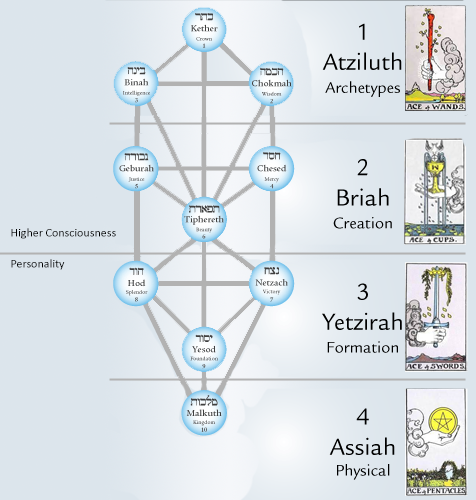
Thus, when modern magicians speak of “the Tree of Life,” they are usually referencing a Hermeticized version—an overlay of their own, not the Jewish original. Even so, all studies focus on the emanation of God's will upon us here in life. The Kabbalah is rooted in the first five books of the bible as well as Ezekiel I.
Thus, you have true Kabbalists who are modern-day biblical mystics, in this case, think Moses, the Apostle Paul, the prophet Elijah, Enoch, Isaiah, John the Baptist, David, Solomon - the people who open themselves to the direct experience of God from which we get most of the lessons of the bible. Western occultists, depending on the lineage, often hijack or appropriate these original meanings into something else.
3. Kabbalah Is Not Gnosticism
Another conflation in the podcast was the claim that Kabbalah is a “Gnostic religion” hidden from non-initiates. In reality:
Gnosticism is a family of 2nd-century sects that taught the material world is a prison of a false demiurge. This is the view that God is something or someone to escape or rebel against.
Kabbalah is not dualistic. It affirms the unity of God, creation, and the possibility of tikkun (rectification).
The study of Kabbalah has traditionally been restricted to mature, learned Jews—not because it is a “secret religion,” but because of its depth and potential for misunderstanding. It takes a tremendous amount of study, mostly so one does not mislead themselves, allow themselves to be misled by others.
4. AI, Digital Life, and the Book of Revelation
The podcast suggested that Kabbalah preserved by Jews has evolved into digital life, AI, and the creatures of Revelation. This is a modern metaphor, not a Kabbalistic prophecy. The Tree of Knowledge of Good and Evil and the Tree of Life are archetypal symbols, not blueprints for Silicon Valley.
They go so far off the rails with this claim, its distasteful to expand further on this point.
5. The Tree of Life vs. the “Nightside”
In the second section, the host likened Nick Land’s “Numogram” to a “dark satanic version” of the Tree of Life, citing Kenneth Grant’s Nightside of Eden and the “Tunnels of Set.”
Here again, context matters:
The Tree of Life in Kabbalah (Etz Chaim) is a symbolic map of the Divine attributes, guiding the soul upward toward unity with God.
The Qliphoth (“husks”) are Kabbalah’s way of describing imbalance, evil, and distortion—warnings, not a ritual roadmap.
Kenneth Grant (a disciple of Aleister Crowley) invented the “Nightside” and “Tunnels of Set” as a Thelemic occult inversion. This is not Jewish mysticism at all, and is a complete misunderstanding of Kabbalah.
To conflate Grant’s Typhonian magic or Land’s cyber-occultism with authentic Kabbalah is like confusing a caricature with an original painting. The main misunderstanding Carlson and his guest have is that the Qlipoth, if we strip away all the terminology, really represents garden-variety temptation and sin. It’s just another way of describing it.
I write this not to defend the lessons of Kabbalah out of tribal loyalty, other than to God, but to speak the truth about a sacred tradition. The Tree of Life is not a ladder to hell but a map of ascent, no different than the Ten Commandments. Its purpose is not rebellion against God but union with the Divine. Its secrecy is not elitism but humility before mystery. If the definition of secrecy hinges upon the ability of one to pick up a book and educate themselves, then it’s really not secret at all. It's willful ignorance. It's sad to say, in a lot of ways, Mr Carlson has slid from a proper journalist rebelling against mainstream corporate media to an artist of conspiracies and conjecture, rather than counterpoints and investigation.
If one wishes to critique AI, modern occultism, or Silicon Valley’s hubris, by all means do so. But do not revive the tired lie that Jews carry hidden knowledge to enslave or destroy the world. That is not insight, it’s bigotry. The Tree of Life will stand as a lesson as it always has: an invitation to God's wisdom, compassion, and balance. Those who distort it for sensationalism or antisemitic narrative will ultimately be judged—not by my words, but by the very fruits of their own actions.
Frater Lucis